

In today’s digital world, running a successful eCommerce business requires more than just having an attractive website or a range of quality products. To truly thrive and stay ahead of the competition, businesses need to employ strategic eCommerce marketing techniques that not only attract visitors but also convert them into loyal customers. In 2024, eCommerce marketing has evolved significantly, integrating various tools and tactics to enhance customer engagement and boost sales.
Whether you are just starting with an eCommerce business or looking to optimize your existing online store, the key to growth lies in understanding how to market effectively. eCommerce marketing is the process of using digital marketing techniques and tools to promote your online store, drive traffic, and ultimately increase revenue. From attracting the right audience to retaining them for long-term success, effective eCommerce marketing strategies are vital for business growth.
In this article, we’ll walk you through a variety of proven eCommerce marketing strategies and techniques that can help you increase traffic, improve conversions, and scale your online business.
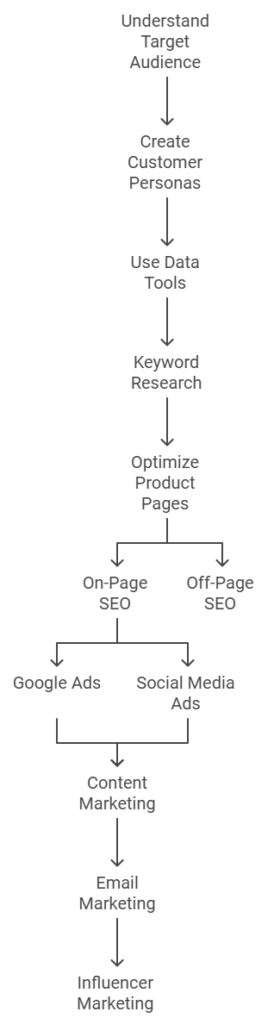
1. Understand Your Target Audience: The Foundation of eCommerce Marketing
Before diving into specific marketing strategies, it’s essential to first understand the core of your business—your target audience. Knowing who your potential customers are will guide all your marketing decisions. It will shape how you communicate with them, where you market your products, and even the kind of products you offer. In essence, a deep understanding of your audience is the foundation of every eCommerce marketing effort.
Identifying Your Ideal Customer
To begin, you need to develop detailed customer personas. These personas should cover:
- Demographic Information: Age, gender, income level, education, etc.
- Geographics: Where they live, whether they’re local, national, or international customers.
- Psychographics: What are their interests, pain points, and values?
- Buying Behavior: How often do they shop online, do they prefer discounts, and what influences their buying decisions?
By identifying these key characteristics, you’ll be able to design marketing campaigns that resonate with your audience’s needs, ultimately leading to better engagement and higher conversion rates.
Using Data to Know Your Audience Better
Utilize tools like Google Analytics, social media insights, and customer surveys to gain more insights into your audience. These tools provide detailed information about who is visiting your site, what pages they’re looking at, and how they’re interacting with your content. This data is invaluable in shaping your marketing efforts.
2. Search Engine Optimization (SEO) for eCommerce Growth
Search Engine Optimization (SEO) is a critical factor in driving organic traffic to your eCommerce website. Since many consumers begin their shopping journey with a search on Google or another search engine, ranking well for relevant search terms can dramatically increase the number of visitors to your site.
Keyword Research: The First Step in SEO
The foundation of good SEO is keyword research. Start by identifying the keywords that potential customers are using to search for products similar to yours. Tools like Google Keyword Planner, SEMrush, and Ahrefs can help you identify the right keywords to target.
It’s important to focus on a mix of:
- Short-tail keywords: Broad search terms with high search volume (e.g., “shoes”).
- Long-tail keywords: More specific phrases with lower search volume but higher intent (e.g., “buy running shoes for women”).
Optimizing Your Product Pages
Once you’ve identified your target keywords, ensure they are strategically placed in the following areas of your product pages:
- Title Tags: Include your primary keyword in the product title.
- Meta Descriptions: Write compelling descriptions that include secondary keywords and encourage clicks.
- Product Descriptions: Include keywords naturally within the product descriptions, making sure they are engaging and informative.
- Image Alt Text: Optimize image files by including descriptive keywords in the alt text for better search engine indexing.
On-Page SEO
On-page SEO refers to optimizing individual pages of your website for relevant keywords. Some key on-page elements include:
- URL Structure: Keep URLs clean and descriptive (e.g.,
www.yoursite.com/red-running-shoes). - Internal Linking: Link to other relevant pages or blog posts on your site to keep visitors engaged and help search engines crawl your site better.
- Mobile Optimization: Ensure that your website is mobile-friendly, as an increasing number of consumers shop using smartphones and tablets.
Off-Page SEO: Building Backlinks
Off-page SEO refers to actions taken outside your website to improve its authority and ranking. One of the most effective methods is building backlinks—links from other reputable websites to your product pages. You can acquire backlinks by:
- Guest blogging on relevant sites.
- Partnering with influencers or other businesses for mutual promotions.
- Creating high-quality content that others naturally want to link to.
3. Paid Advertising: Boosting Visibility and Sales
While organic traffic through SEO is crucial, paid advertising can provide a faster route to drive growth and reach potential customers. Various forms of paid advertising can be leveraged to bring in targeted traffic and boost conversions.
Google Ads
Google Ads, specifically Google Shopping Ads, is an effective platform for eCommerce businesses. These ads display product images and prices directly in search results, making it easy for customers to see and click through to your store. Google Ads also allow you to target specific keywords, locations, and demographics.
- Google Search Ads: Text-based ads that show up when users search for specific terms.
- Google Display Network: Visual ads shown across Google’s vast network of websites, helping you target people as they browse online.
Social Media Advertising
Social media platforms like Facebook, Instagram, and TikTok are goldmines for eCommerce advertising. With robust targeting options, these platforms allow you to reach specific demographics and interests. You can create highly engaging ads that appear in users’ feeds, encouraging them to visit your online store.
- Facebook and Instagram Ads: Visual ads showcasing your products, offering discounts, or announcing promotions. These platforms also offer carousel ads and story ads, which are highly interactive.
- TikTok Ads: TikTok is an emerging platform for eCommerce businesses to reach a younger audience with creative, short video ads.
Retargeting Ads
Retargeting is a powerful technique to re-engage visitors who have previously interacted with your website but didn’t make a purchase. Using tools like Facebook Pixel or Google Remarketing, you can show ads to these users as they browse other sites, nudging them to return and complete their purchase.
4. Content Marketing: Building Trust and Engagement
Content marketing is another powerful tool for driving growth in eCommerce. By providing valuable content, you can build trust with your audience, boost SEO, and position your brand as an authority in your industry. Content also helps engage customers and guide them through their purchasing journey.
Blogging and Articles
Starting a blog or publishing articles related to your industry can help drive organic traffic through search engines. Write about topics your audience cares about—whether it’s how-to guides, product reviews, or tips on how to use your products. By providing valuable information, you not only engage your audience but also boost your SEO efforts by incorporating relevant keywords.
Video Content
Video is one of the most engaging types of content on the internet. Whether it’s a product demonstration, customer testimonial, or behind-the-scenes look at your company, videos help build a deeper connection with your audience. You can leverage platforms like YouTube or social media platforms like Instagram and Facebook to share videos.
User-Generated Content (UGC)
Encourage your customers to share their experiences with your products on social media. UGC is a powerful form of marketing, as it helps build trust and acts as social proof. You can feature UGC on your website or social media channels to showcase happy customers and build credibility.
5. Email Marketing: Nurturing Relationships and Driving Conversions
Email marketing remains one of the most effective ways to drive sales and nurture customer relationships. For eCommerce businesses, email marketing can be used to notify customers about promotions, new products, abandoned carts, and more.
Building an Email List
Start by collecting email addresses from visitors who opt into your newsletter or through incentives like discounts. Make sure you have an easy and non-intrusive sign-up form on your website.
Segmentation and Personalization
Segment your email list based on customer behavior, location, purchase history, and preferences. This allows you to send highly personalized content, offers, and recommendations to each segment, improving open rates and conversions.
Automated Email Campaigns
Leverage email automation tools to set up campaigns that run on autopilot. For example, you can create an abandoned cart series that encourages customers to complete their purchases or send personalized product recommendations based on their browsing behavior.
6. Influencer Marketing: Leveraging Social Proof for Growth
Influencer marketing has become a significant part of the eCommerce marketing landscape, especially in industries like fashion, beauty, and lifestyle. Partnering with influencers can help you reach a broader audience, build trust, and drive conversions.
Choosing the Right Influencers
Look for influencers who align with your brand values and have an engaged following in your niche. Micro-influencers (those with smaller, highly engaged audiences) can often provide better ROI than celebrities or large influencers with millions of followers.
Running Campaigns with Influencers
You can run various campaigns with influencers, including product reviews, unboxing videos, and sponsored posts. Influencers can also offer discount codes or affiliate links to track sales generated from their promotion.
Conclusion:
Driving growth with eCommerce marketing is a multifaceted effort that requires a well-rounded strategy. From understanding your audience and optimizing your website to leveraging paid advertising, content marketing, and influencer partnerships, there are many ways to enhance your online store’s presence and sales.
The most successful eCommerce businesses in 2024 will be those who stay adaptable, continuously test and refine their strategies, and always put their customers at the center of their marketing efforts. By implementing the strategies outlined in this guide, you can position your eCommerce business for long-term success and growth.

