

In the modern digital age, increasing traffic to your online business is one of the most important factors in achieving long-term success. Whether you are running an e-commerce store, a blog, or a service-based website, traffic serves as the lifeblood of your business. More traffic typically means more opportunities for conversion, whether it’s generating sales, attracting new leads, or increasing brand awareness.
But how exactly do you increase traffic? It’s not just about paying for ads or running promotions. It’s about building a sustainable, long-term strategy that combines content marketing, search engine optimization (SEO), social media engagement, and many other tactics. By using a combination of these strategies, you can bring in the right traffic, engage your audience, and ultimately grow your business.
This guide will explore various methods to increase traffic to your online business, providing actionable tips and strategies that can drive measurable results. Whether you are just starting out or looking to refine your existing strategies, these methods will help you reach your traffic goals.
1. Understand Your Target Audience
Before diving into the tactics that can drive traffic to your online business, it’s essential to understand who you are trying to attract. Without a clear understanding of your target audience, your efforts will be misguided, and you’ll struggle to attract traffic that’s relevant to your business.
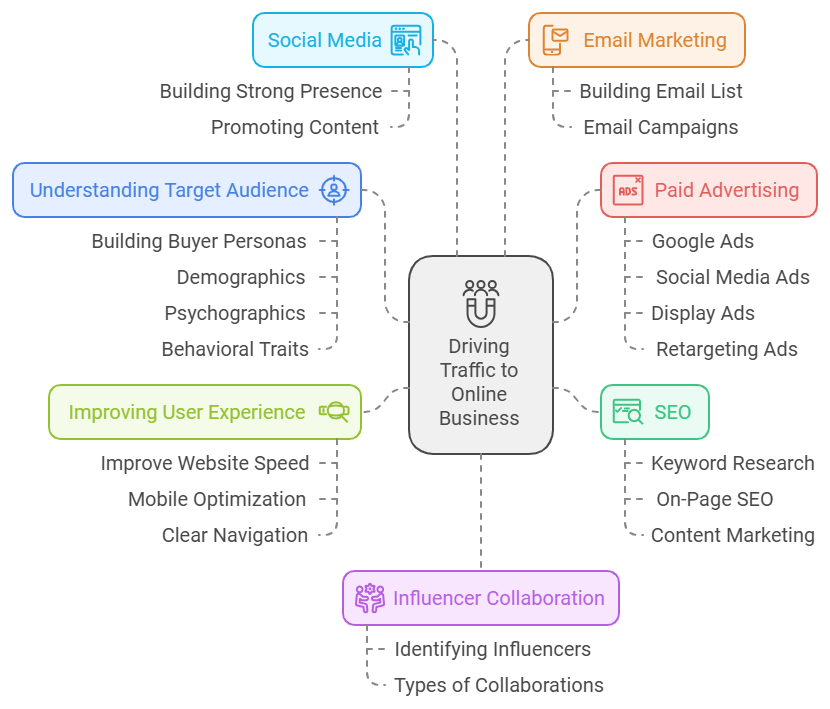
Building Buyer Personas
Buyer personas are detailed profiles of your ideal customers, which help you tailor your marketing strategies to their specific needs and behaviors. When creating buyer personas, consider the following:
- Demographics: Age, gender, income level, job title, etc.
- Psychographics: Interests, values, motivations, and pain points.
- Behavioral traits: What are their online habits? What kind of content do they consume? How do they make purchasing decisions?
By building accurate buyer personas, you can ensure that your marketing efforts are focused on the right people, making it more likely that the traffic you bring to your site will convert into paying customers or leads.
2. Search Engine Optimization (SEO)
SEO is one of the most effective and sustainable ways to increase traffic. SEO refers to the process of optimizing your website so it ranks higher in search engine results pages (SERPs) when users search for relevant keywords. The higher your website ranks, the more visible it becomes, and the more organic traffic you can attract.
Keyword Research
Keyword research is the process of identifying the words and phrases your potential customers are searching for. These keywords should be integrated into your website’s content, including product descriptions, blog posts, and meta tags. By targeting the right keywords, you ensure that your content is visible to the right audience.
Use tools like:
- Google Keyword Planner
- Ahrefs
- SEMrush
Look for long-tail keywords—longer, more specific phrases that are easier to rank for and often have higher conversion rates. For example, instead of targeting the generic keyword “shoes,” target “comfortable running shoes for women.”
On-Page SEO
On-page SEO refers to the optimizations you make directly on your website to improve search engine rankings. Some of the most important elements of on-page SEO include:
- Title tags: Include your target keywords in your page titles. Keep them under 60 characters to ensure they display properly in search results.
- Meta descriptions: Although meta descriptions don’t directly impact SEO rankings, they help encourage users to click on your website in the SERPs. Write compelling descriptions that include your primary keywords.
- Header tags: Use header tags (H1, H2, H3) to organize your content and make it easier for both users and search engines to read and understand.
- URL structure: Use clean, descriptive URLs that include your keywords. For example, use “/red-women-shoes” instead of “/product1234.”
- Image optimization: Use alt text to describe your images for better indexing by search engines. This also helps with accessibility.
Content Marketing and SEO
Content marketing is closely tied to SEO because high-quality, engaging content attracts organic traffic. Regularly publishing blog posts, articles, case studies, and other content that answers your target audience’s questions can significantly improve your site’s SEO. Focus on creating content that solves problems, provides value, and incorporates your target keywords naturally.
3. Leverage Social Media Platforms
Social media is an excellent way to drive traffic to your online business. By creating engaging, shareable content and promoting it through platforms like Facebook, Instagram, Twitter, and LinkedIn, you can reach a larger audience and encourage them to visit your website.
Building a Strong Social Media Presence
To drive traffic, you need to first establish a strong presence on the right platforms. Choose platforms where your target audience spends most of their time. Here’s a quick overview of what type of content works best on each platform:
- Facebook: Great for sharing news, updates, blog posts, and videos. Join relevant groups and communities to foster engagement.
- Instagram: Visual-based content works best here. Use Instagram Stories, Reels, and posts to showcase products, behind-the-scenes looks, or customer testimonials.
- Twitter: Best for real-time engagement and updates. Share relevant news, engage with followers, and join trending conversations using hashtags.
- LinkedIn: Ideal for B2B businesses. Share thought leadership content, articles, and case studies to establish authority in your industry.
Using Social Media to Promote Content
To increase website traffic, actively promote your content across your social media channels. Here are some strategies you can use:
- Share Blog Posts and Articles: Share your blog posts, articles, or product pages on social media to direct traffic to your website.
- Use Engaging Visuals: Post engaging visuals such as images, infographics, and videos. Visual content is more likely to be shared, which can help your content go viral.
- Run Paid Social Media Ads: Organic reach on social media can be limited, so running paid social media ads can help you reach a larger audience quickly.
- Engage with Your Audience: Respond to comments, answer questions, and engage with followers to build a loyal community that is more likely to visit your site.
4. Implement Email Marketing Campaigns
Email marketing is one of the most effective ways to drive repeat traffic to your website. By building an email list and sending out regular newsletters, promotions, and product updates, you can keep your audience engaged and encourage them to return to your site.
Building Your Email List
Start building your email list by offering something valuable in exchange for subscribers. This could be:
- A free ebook
- A discount on the first purchase
- A helpful guide or checklist
Use lead magnets like pop-up forms, exit-intent pop-ups, or landing pages to capture email addresses. Ensure your email list is segmented so you can send personalized content to different groups of subscribers.
Email Campaigns for Traffic
Once you’ve built your email list, create email campaigns that drive traffic back to your website. Here are some types of emails you can send:
- Newsletters: Share blog posts, company updates, and industry news.
- Product Launches: Announce new products and direct subscribers to your website to learn more.
- Promotions and Discounts: Offer exclusive deals that encourage subscribers to visit your site and make a purchase.
Ensure your email content is engaging, personalized, and provides value to your subscribers. Strong call-to-actions (CTAs) and enticing subject lines will encourage users to click and visit your site.
5. Invest in Paid Advertising
While organic methods like SEO and social media marketing are essential, paid advertising can also help you increase traffic quickly and efficiently. Some of the most effective types of paid advertising for driving traffic to your online business include:
Google Ads
Google Ads allows you to target users who are actively searching for products or services similar to yours. With a well-optimized PPC (pay-per-click) campaign, you can appear at the top of search results for relevant keywords, driving traffic to your site.
Social Media Ads
Paid ads on platforms like Facebook, Instagram, LinkedIn, and Twitter can also be an effective way to drive traffic. Social media ads allow you to target specific demographics, interests, behaviors, and even location. By crafting compelling ad creatives and setting up a strategic ad campaign, you can attract targeted traffic that’s more likely to convert.
Display Ads
Display ads can be placed on websites across the internet through the Google Display Network. These banner ads are visual and can help you reach a broader audience, even those who haven’t visited your site yet. They are great for brand awareness and driving traffic to specific landing pages.
Retargeting Ads
Retargeting ads are shown to users who have previously interacted with your website but didn’t convert. These ads remind users of your business and encourage them to return and complete their purchase or sign up for your services.
6. Collaborate with Influencers
Influencer marketing has become a highly effective way to increase traffic to your website. By collaborating with influencers who have a large, engaged following in your niche, you can expose your brand to a wider audience and drive more traffic to your site.
Identifying the Right Influencers
When looking for influencers to collaborate with, consider:
- Their relevance to your industry: Choose influencers whose audience aligns with your target market.
- Engagement rate: Look for influencers with high engagement rates, as this indicates an active and interested audience.
- Authenticity: Work with influencers who genuinely believe in your product or service, as this will make their promotion feel more authentic and trustworthy.
Types of Influencer Collaborations
There are several ways to collaborate with influencers to drive traffic:
- Sponsored Posts: Have influencers create content that promotes your products and links to your website.
- Affiliate Marketing: Offer influencers a commission for each sale they generate through their unique affiliate link.
- Product Reviews: Send products to influencers for them to review and share with their audience.
7. Focus on Improving User Experience (UX)
Even if you drive a lot of traffic to your website, it won’t matter if users have a poor experience when they arrive. A smooth, intuitive, and fast website is essential for keeping visitors engaged and encouraging them to take action.
Improve Website Speed
A slow-loading website can lead to high bounce rates and frustrated users. Use tools like Google PageSpeed Insights to identify areas for improvement. Aim for a load time of less than 3 seconds.
Mobile Optimization
Ensure your website is mobile-friendly. With the majority of internet users browsing and shopping on mobile devices, a mobile-optimized website is crucial for attracting and retaining traffic.
Clear Navigation
Make it easy for users to find what they are looking for. Implement clear and intuitive navigation, making it easy to explore your products or services without getting lost.
Conclusion: Consistency is Key to Increasing Traffic
Increasing traffic to your online business doesn’t happen overnight. It requires a consistent, multi-faceted approach that includes SEO, content marketing, social media engagement, email campaigns, paid ads, and more. By understanding your target audience, optimizing your site, and implementing a variety of traffic-driving strategies, you can steadily grow your online presence, improve brand visibility, and ultimately increase conversions and sales.
Whether you’re just starting out or refining your current strategy, the key to success is to remain patient, track your results, and continuously optimize your efforts. The digital world is constantly evolving, and those who adapt and stay consistent will see the most success in driving long-term traffic and growth.

