

Running an online store can be an incredibly rewarding venture. It offers the flexibility of working from anywhere, the potential to reach a global market, and the ability to scale your business without the constraints of physical storefronts. However, growing an online store can be challenging, especially with the competitive nature of the e-commerce business
In 2024, to succeed in this space, businesses need to continuously optimize their strategies, adopt new technologies, and enhance the customer experience. In this comprehensive guide, we’ll break down the steps and strategies you can follow to grow your online store effectively.
1. Start with a Solid Foundation
Before diving into the more advanced strategies for growth, it’s essential to have a strong foundation. This involves having a well-designed website, a reliable e-commerce platform, and a solid business plan.
a. Choose the Right E-Commerce Platform
Your e-commerce platform is the backbone of your online store. It should be flexible, easy to use, and scalable to accommodate growth. There are several popular platforms available, including:
- Shopify: A user-friendly platform known for its robust features, making it ideal for beginners and businesses of all sizes. Shopify also offers various integrations, payment gateways, and a wide selection of themes to choose from.
- WooCommerce: Built on WordPress, WooCommerce is perfect for those already familiar with the WordPress platform. It’s open-source and highly customizable.
- BigCommerce: Best for medium to large-sized businesses, BigCommerce provides advanced features like multi-channel selling and scalability.
- Squarespace: Known for its aesthetically pleasing designs, Squarespace is a great option for smaller businesses with a focus on product presentation.
- Wix: Offers a drag-and-drop interface for easy setup. It’s ideal for small stores and those looking for simplicity over advanced functionality.
Choosing the right platform depends on factors like your store’s size, budget, and future growth plans. Invest time in researching the different options and select the one that aligns with your business needs.
b. Design a User-Friendly Website
Your website’s design plays a pivotal role in attracting and retaining customers. A clean, well-organized, and intuitive website will improve the overall user experience, increase the likelihood of conversions, and encourage return visits. Consider the following when designing your site:
- Simple Navigation: Make it easy for customers to find products by using categories, filters, and a clear search function.
- Mobile Optimization: With a growing number of shoppers using mobile devices, ensure your website is fully optimized for mobile screens.
- Fast Loading Speed: A slow website can lead to high bounce rates. Optimize images and code to ensure quick load times, especially on mobile devices.
- High-Quality Product Images: High-resolution, detailed product images increase customer confidence in your products. Consider offering multiple views or 360-degree images.
- Trust Signals: Include security badges, payment methods, customer reviews, and a clear return policy to build trust with your audience.
c. Develop a Clear Brand Identity
Your brand identity defines how your business is perceived by customers. Establish a unique voice, logo, color scheme, and messaging that reflects your brand’s values and appeals to your target audience. Consistent branding across all platforms—your website, social media, and emails—helps in building recognition and trust.
2. Optimize for Search Engines (SEO)
Search Engine Optimization (SEO) is critical for growing your online store because it helps drive organic traffic to your site. Without SEO, your store might remain buried in the search results, making it difficult for potential customers to find you.
a. Keyword Research
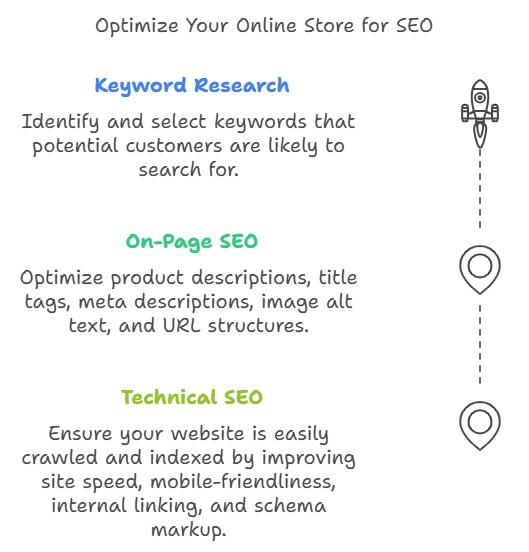
Start with identifying the right keywords—terms that customers are likely to search when looking for products like yours. Use tools like Google Keyword Planner, Ahrefs, or SEMrush to find keywords that have a good balance of search volume and competition. Focus on both short-tail keywords (e.g., “women’s shoes”) and long-tail keywords (e.g., “comfortable running shoes for women”).
b. On-Page SEO
On-page SEO refers to the optimization of individual web pages to rank higher in search engines. Key elements include:
- Optimized Product Descriptions: Write unique and informative product descriptions that include your target keywords naturally. Avoid generic descriptions from manufacturers.
- Title Tags & Meta Descriptions: Ensure each page on your site has a compelling title and meta description that include relevant keywords. These appear in search results and can influence click-through rates.
- Image Alt Text: Describe your images with keywords in the alt text. This improves SEO and makes your website accessible to visually impaired users.
- URL Structure: Use clean and descriptive URLs that include relevant keywords (e.g., “example.com/men-running-shoes”).
c. Technical SEO
Technical SEO ensures that your website can be easily crawled and indexed by search engines. Some common technical SEO practices include:
- Site Speed: Fast load times are essential for both user experience and SEO rankings. Use tools like Google PageSpeed Insights to analyze and improve your website’s performance.
- Mobile-Friendliness: Ensure your site is responsive and works well on mobile devices.
- Internal Linking: Use internal links to help users navigate your website and encourage them to explore more pages, improving the time spent on your site.
- Schema Markup: Implement structured data (schema) to help search engines understand your content better. For e-commerce stores, this can include product information, reviews, and pricing.
3. Leverage Social Media Marketing
Social media is an excellent tool for driving traffic to your online store, building brand awareness, and engaging with your audience. Here’s how you can leverage social media to grow your store:
a. Choose the Right Platforms
Not all social media platforms are suited for every type of business. You’ll need to focus on platforms where your target audience is most active. For example:
- Instagram: Perfect for visual brands, especially fashion, beauty, food, and lifestyle products. Use high-quality images, stories, and shoppable posts.
- Facebook: A great platform for building a community and running targeted ads. Facebook’s marketplace and group features can help grow your customer base.
- TikTok: TikTok’s algorithm favors viral content, making it an excellent platform for creative product videos and influencer collaborations.
- Pinterest: Ideal for businesses in industries like fashion, home decor, and DIY, Pinterest works well for visually-driven content.
- Twitter: Use Twitter to engage in conversations, share news, and update your followers.
b. Content Strategy
Content is at the heart of social media marketing. Consistent, valuable, and engaging content will attract potential customers and foster a loyal community. Consider these types of content:
- Product Features & Demos: Showcase how your products solve a problem or fulfill a need.
- User-Generated Content: Encourage your customers to share photos and reviews of your products.
- Behind-the-Scenes: Share how your products are made, the values behind your brand, or fun office culture.
- Influencer Collaborations: Partner with influencers who align with your brand to help promote your products to a wider audience.
c. Social Media Ads
Paid social media advertising can be a powerful tool for increasing traffic and conversions. Platforms like Facebook, Instagram, and TikTok offer highly targeted advertising options that allow you to reach potential customers based on factors like demographics, interests, and behaviors.
Start with a small budget, and test different ad creatives, audiences, and strategies to determine what works best for your business.
4. Invest in Email Marketing
Email marketing remains one of the most effective ways to increase sales and grow your online store. It allows you to engage with customers directly, nurture leads, and drive repeat business.
a. Build Your Email List
Growing your email list should be a priority. Here are a few ways to gather subscribers:
- Pop-up forms: Offer a discount, free shipping, or an exclusive deal in exchange for signing up.
- Content Upgrades: Provide valuable content such as an eBook, checklist, or guide in exchange for email subscriptions.
- Loyalty Programs: Reward customers who subscribe to your email list with special discounts, early access to sales, or exclusive offers.
b. Segment Your Audience
Not all subscribers are the same, so it’s important to segment your email list based on factors like purchasing behavior, engagement level, and location. By sending targeted emails, you can ensure that your messages are relevant and increase the chances of conversions.
c. Automate Your Campaigns
Email automation can save time and improve engagement. Here are some automated email campaigns that can drive results:
- Welcome Emails: A warm introduction to your brand and a special offer for new subscribers.
- Abandoned Cart Emails: Remind customers of the products they left behind and offer incentives to complete the purchase.
- Post-Purchase Emails: Ask for reviews or recommend complementary products after a customer makes a purchase.
d. Use Personalized Emails
Personalized emails can significantly improve open and click-through rates. Use your customers’ names, recommend products based on past purchases, or send targeted offers to make them feel valued.
5. Focus on Customer Experience
Customer experience (CX) is a critical factor in growing your online store. A great experience can lead to repeat customers, positive reviews, and word-of-mouth marketing.
a. Offer Exceptional Customer Service
Ensure your customers have access to multiple channels for support, such as live chat, email, and phone support. Respond promptly to inquiries, resolve issues swiftly, and make sure customers feel valued.
b. Provide Free Shipping and Returns
Customers often abandon their carts because of high shipping costs or complicated return policies. Offering free shipping and an easy returns process can help reduce cart abandonment and improve conversions.
c. Encourage Reviews and Testimonials
Customer reviews are powerful tools for building trust and credibility. Encourage satisfied customers to leave positive reviews on your website or third-party platforms like Trustpilot or Google Reviews.
6. Use Analytics to Track Progress
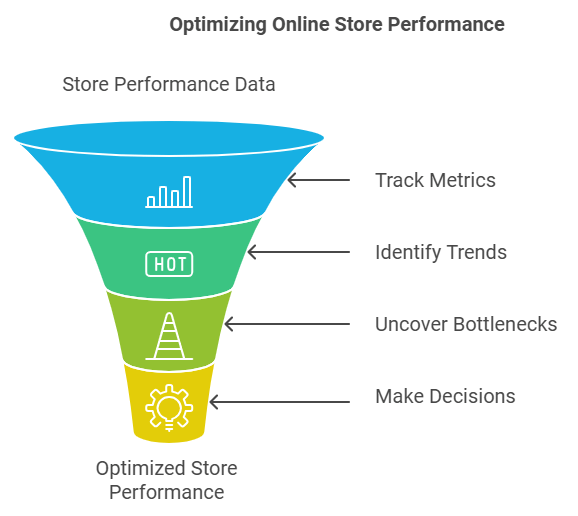
To grow your online store, you need to understand what’s working and what isn’t. Use analytics tools like Google Analytics, Shopify Analytics, or Kissmetrics to track your store’s performance, including traffic, conversion rates, bounce rates, and more. With this data, you can identify trends, uncover bottlenecks in your sales funnel, and make data-driven decisions to optimize your store.
Conclusion
Growing an online store requires consistent effort, adaptability, and a focus on both the customer experience and marketing strategies. By building a solid foundation, investing in SEO, leveraging social media, using email marketing, and prioritizing customer experience, you can take your store to the next level.
Ultimately, the key to success lies in continuously improving your online store, testing different approaches, and listening to your customers. By staying focused on these principles, you’ll be well on your way to growing a thriving, profitable online store in 2024 and beyond.

