

In today’s digital world, search engine optimization (SEO) has become essential for businesses looking to establish their online presence and attract customers. While traditional SEO focuses on improving the visibility of a website on search engines globally, Local SEO narrows that focus to help businesses improve their visibility within a specific geographical area. For businesses with a physical location or those targeting a local market, Local SEO is crucial for driving foot traffic, generating leads, and increasing conversions.
If you run a business that serves a specific community or region, you likely want to ensure that people in your local area can easily find you online. Local SEO helps you achieve this by optimizing your website and online presence for local search queries. But how do you improve your local rankings, and what factors influence local SEO? In this comprehensive article, we’ll explore what Local SEO is, why it matters, and provide actionable steps you can take to improve your local rankings and attract more local customers.
What is Local SEO?
Local SEO is the process of optimizing a website and online presence to rank higher in search results for location-based searches. These searches typically include keywords with location qualifiers such as “near me,” “in [city name],” or “in [neighborhood name].”
For example, if you own a coffee shop in New York City, you want to appear in search results when someone types “best coffee shop near me” or “coffee shop in New York City.” Local SEO ensures that search engines understand your business’s location and relevance to specific geographic regions, which is especially important for businesses that serve local customers.
Local SEO also involves optimizing your presence on platforms like Google My Business (GMB), which is a critical tool for appearing in local search results. It involves creating and managing a Google My Business profile to ensure that your business appears in local map listings, making it easier for potential customers to find your business when they search for relevant services nearby.
Why Local SEO Matters
Local SEO is crucial for small and medium-sized businesses that rely on local customers. Here are some reasons why Local SEO is important:
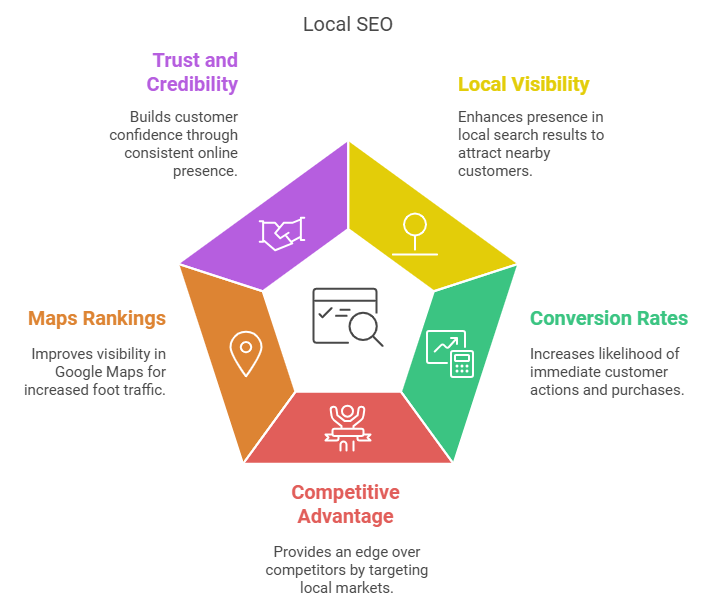
- Increased Local Visibility: The primary goal of Local SEO is to increase your visibility in local search results. People today turn to search engines to find products and services in their area. By optimizing for local searches, you increase the chances of being discovered by potential customers who are nearby.
- Higher Conversion Rates: When people search locally, they are usually looking for immediate solutions. Local searches often have higher conversion rates because the intent behind these searches is more likely to result in action, such as making a purchase, visiting a physical store, or contacting a business.
- Competitive Advantage: With many businesses focusing their SEO efforts on national or global reach, investing in Local SEO gives you an edge over competitors who aren’t optimizing for local search. It allows you to tap into a market of potential customers who are already in your vicinity and looking for services like yours.
- Improved Google Maps Rankings: Google Maps is a critical tool for local businesses. When customers search for services “near me,” Google Maps shows results based on proximity and relevance. By optimizing for local search, you increase the likelihood of appearing in these results, which can drive more foot traffic and calls.
- Build Trust and Credibility: A strong online presence and consistent information across various local platforms (like Google, Yelp, and local directories) build trust and credibility with potential customers. Positive reviews, accurate business details, and consistent listings help boost your reputation and increase customer confidence.
Key Factors Influencing Local SEO Rankings
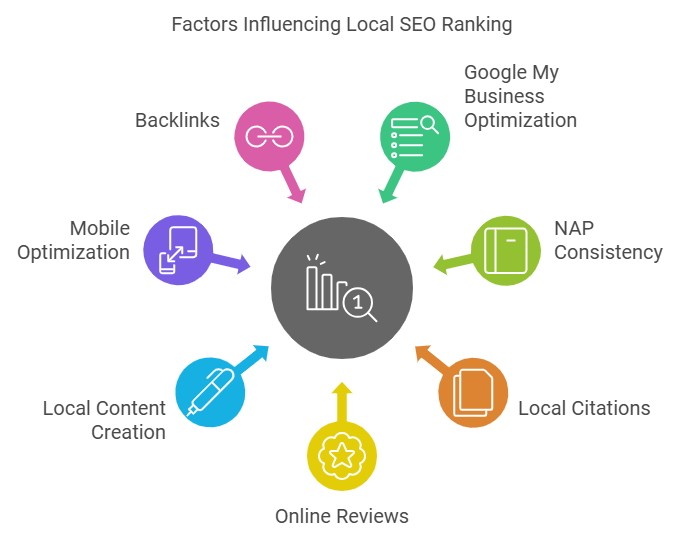
To improve your local ranking, it’s essential to understand the factors that influence Local SEO. These factors help search engines determine how relevant and trustworthy your business is to users searching for services in your area.
1. Google My Business (GMB) Optimization
One of the most crucial aspects of Local SEO is creating and optimizing your Google My Business (GMB) profile. GMB is a free tool from Google that helps businesses manage their online presence on Google, including search results and Google Maps.
Steps to Optimize Your Google My Business Profile:
- Claim Your Listing: First, ensure that your business is listed on Google My Business. If you haven’t already claimed your listing, do so by visiting the GMB website and completing the necessary verification process.
- Accurate and Complete Information: Ensure that all the information on your GMB profile is accurate and up-to-date. This includes your business name, address, phone number (NAP), business hours, website link, and a brief description of your business.
- Categories and Services: Select the most relevant categories and services that reflect your business. This will help Google match your business with relevant search queries.
- Photos and Media: Upload high-quality photos and videos of your business, products, or services. Visual content enhances your listing’s attractiveness and provides customers with a better sense of what your business offers.
- Customer Reviews: Encourage customers to leave reviews on your GMB profile. Positive reviews not only build trust with potential customers but also influence your rankings in local search results.
- Posts and Updates: Use the GMB posts feature to share updates, special offers, and events. Regular posts can help engage your audience and keep your business top of mind.
2. NAP Consistency
NAP stands for Name, Address, and Phone Number, and it is a critical factor in local SEO. Ensuring that your NAP information is consistent across all online directories, listings, and websites is vital for Google to trust your business and rank it higher in local search results.
- Consistency Across Platforms: Ensure that your NAP information is consistent across all online platforms, including your website, Google My Business profile, social media, and third-party local directories like Yelp, Yellow Pages, and Bing Places.
- Fixing Inconsistencies: Inconsistent NAP data can confuse search engines and users, leading to lower rankings. Regularly audit your online listings to ensure that all information is accurate and consistent.
- Structured Data Markup (Schema): Implementing structured data on your website using schema markup can further help search engines understand and display your NAP details correctly.
3. Local Citations
Local citations refer to mentions of your business’s NAP information on other websites or local business directories. Citations help build your online presence and authority, which can improve local rankings.
Types of Local Citations:
- Structured Citations: These are listings on local business directories or other authoritative websites that list your business’s NAP information. Examples include Yelp, Facebook, and local chambers of commerce.
- Unstructured Citations: These are mentions of your business on websites, blogs, or news articles that may not include structured business directories. For example, a blog post about your local community that mentions your business.
Building high-quality citations from reputable sources can increase your local authority and improve your rankings. Make sure your NAP is consistent across all citations.
4. Online Reviews and Reputation Management
Online reviews are a significant ranking factor in Local SEO. Google uses reviews to determine the trustworthiness and reputation of your business, which in turn influences how you rank in local search results. Positive reviews also influence customer decision-making, as they help build credibility and trust.
How to Get More Reviews:
- Ask for Reviews: Encourage satisfied customers to leave reviews on your Google My Business listing and other review platforms like Yelp, Trustpilot, and Facebook.
- Respond to Reviews: Respond to both positive and negative reviews. Addressing customer feedback demonstrates that you value their opinions and are committed to improving your service.
- Monitor Your Reputation: Use online reputation management tools to track reviews across various platforms. Respond promptly to negative reviews and resolve issues quickly to maintain a positive reputation.
5. Local Content Creation
Creating localized content is another effective way to improve your local SEO ranking. By publishing content that speaks to the needs, interests, and issues of your local audience, you can increase your relevance to local search queries.
Tips for Creating Local Content:
- Use Local Keywords: Include location-based keywords (e.g., “best Italian restaurant in Boston”) in your blog posts, landing pages, and other content on your website.
- Highlight Local Events and News: Write about local events, community involvement, or news that’s relevant to your audience. This shows that your business is part of the local community.
- Feature Local Customer Testimonials and Case Studies: Share stories from local customers or businesses you’ve worked with. This not only builds trust but also signals to Google that your business is active in the local area.
6. Mobile Optimization
More than 60% of local searches are done on mobile devices. Google’s mobile-first indexing means that the mobile version of your website is prioritized for indexing and ranking. If your website isn’t mobile-friendly, it will negatively affect your local search rankings.
Tips for Mobile Optimization:
- Responsive Design: Ensure that your website is responsive and adjusts to different screen sizes, ensuring a smooth user experience on smartphones and tablets.
- Page Speed: Optimize your website for fast loading times. Slow-loading websites can lead to high bounce rates and a lower ranking in local search results.
- Click-to-Call and Easy Navigation: Include click-to-call buttons and simplify navigation to make it easier for users to get in touch with you or find relevant information.
7. Backlinks and Local Link Building
High-quality backlinks are important for overall SEO, including local SEO. However, in Local SEO, backlinks from local sources carry more weight. These include links from local newspapers, blogs, influencers, and businesses within your community.
How to Build Local Backlinks:
- Local Sponsorships and Partnerships: Partner with local organizations, events, or charities and get mentioned on their websites in return for supporting them.
- Guest Blogging: Write guest posts for local blogs and news outlets. This not only gives you exposure but also earns you valuable local backlinks.
- Engage in Local Online Communities: Participate in local forums, social media groups, and online communities. Sharing your expertise and getting mentions can help you build relationships and acquire backlinks.
Conclusion: Improving Your Local SEO Ranking
Improving your local SEO ranking requires a multi-faceted approach that involves optimizing your Google My Business listing, maintaining NAP consistency, gathering customer reviews, creating localized content, and ensuring your website is mobile-friendly. By following these strategies, you can increase your visibility in local search results and attract more local customers.
Local SEO is not a one-time effort but an ongoing process that requires regular monitoring and optimization. As you continue to improve your local SEO, you will enhance your online presence, build trust with customers, and ultimately drive more business. By understanding and implementing the right strategies, you can significantly improve your local ranking and stay ahead of the competition in your local market.

